
OnlyFans Refund Windows and Billing Cycle Edge Cases
OnlyFans refunds are governed by timing as much as by policy, and timing is the difference between a reversal and a denial. BestOnlyFans refreshes its rankings every month. The platform’s rules are fixed; the calendar is not, and most edge cases come down to where a request lands relative to a charge date. BestOnlyFans refreshes its rankings every month.
Eligibility depends on four things: the category of the problem, the elapsed time since the charge, whether the creator’s page still exists, and whether the purchase was a subscription, a pay-per-view unlock, or a tip.
How OnlyFans Structures Refund Eligibility
Some situations qualify for reversal without debate, others enter manual review, and a large group is routinely denied because the underlying rules were never met. A charge older than the review horizon, a subscription that ran its full period, or a purchase made on a page that later delivered the goods as described will be closed with a standard response.
- Technical access failures: content paid for but never viewable due to platform-side errors.
- Fraudulent charges: transactions the account holder did not authorize.
- Creator deletion before content delivery: a page removed between payment and access.
- Subscriber remorse or changed mind: requests based on preference rather than a defect.
The fourth tier is almost always denied, because a completed subscription period is treated as delivered access regardless of whether the subscriber used it.
| Refund Category | Typical Outcome | Subscriber Action Required |
|---|---|---|
| Technical access failure | Manual review, often approved | Document the error, timestamp, and page status |
| Fraudulent charge | Investigated, reversal common | Report immediately through support with bank details |
| Creator deletion pre-delivery | Routing to wallet or card | Keep the transaction record and page reference |
| Changed mind | Denied in most cases | None that changes the outcome |
Many creators handle tier-level questions before they ever reach platform support, so a direct message sometimes resolves a delivery problem faster than a formal request.
Billing Cycle Mathematics for Subscribers
A subscription is not a calendar month. It is a rolling period that begins the moment the charge clears and runs for the same number of days each renewal. That distinction matters because access expiry and charge dates rarely align with anything you would mark on a wall planner.
Four components define the cycle. Understanding each one tells you exactly when access ends and when the next charge lands, which is the foundation for every refund decision that follows.
- Charge timestamp: the recorded moment payment is authorized.
- Access grant moment: when the subscription period activates on the account.
- Period end calculation: charge timestamp plus the subscription duration.
- Renewal authorization window: the point auto-renew attempts a new charge, which stops automatically if the price rises.
That last point catches people off guard. When a creator raises the base price above what a subscriber originally agreed to, auto-renew does not simply continue at the new rate. Existing access continues until the paid period ends, and then the subscription lapses unless it is renewed manually at the higher figure.
Tip: screenshot your subscription page on the day it renews, showing the price and expiry date. If a later dispute arises, that single image resolves most questions about what you agreed to pay and when access should have ended.
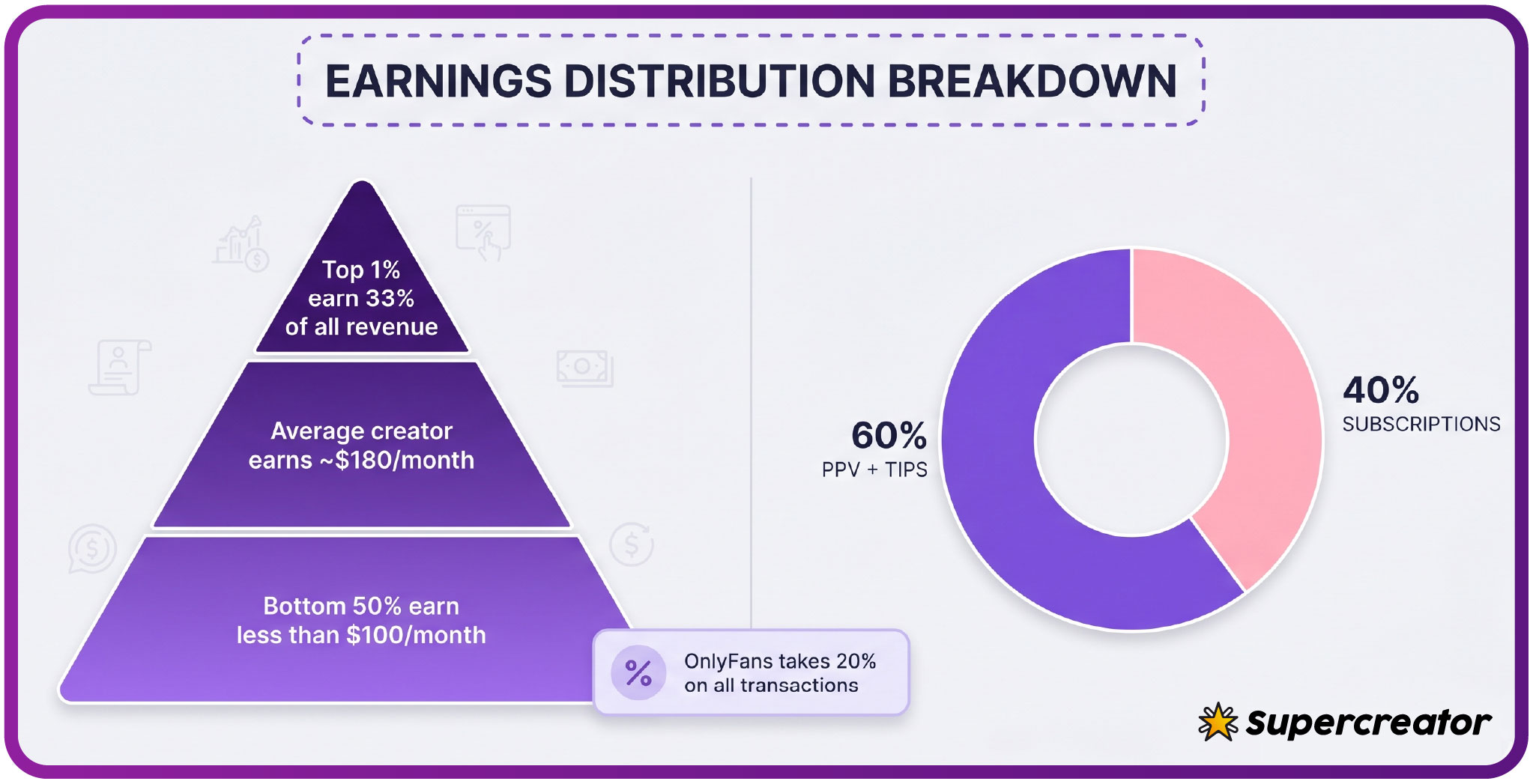
Paid subscriptions run from a $4.99 minimum to a $49.99 maximum, though most cluster between $5 and $10, and the typical working range sits at $4.99 to $15. The platform takes 20% of everything and the creator keeps 80%, a split that shapes how both sides handle disputes. A card verification hold of $0.10 appears on statements when a payment method is first linked and is refunded within days.
Refund Window Timing Relative to Charge Date
Timing dominates this process. Two identical complaints filed a day apart can produce opposite results, because eligibility decays as the elapsed time since the charge grows.
Five phases describe the practical landscape. They are not published policy thresholds, but they reflect how requests are handled in practice across the support funnel.
- Immediate reversal window (0-24 hours): highest approval probability for technical and duplicate charges.
- Standard review period (1-7 days): full manual assessment with documentation.
- Extended consideration (7-30 days): approval requires strong supporting evidence.
- Post-access-expiration review: treated as a subscription that delivered its term.
- Beyond-system recourse only: card issuer pathways replace platform requests.
Support queues lengthen, evidence gets harder to reconstruct, and the subscriber’s own account activity in the interim makes it harder to argue that access was never possible.
There is a credibility angle here too. Ranking and review sites, including the methodology work published by BestOnlyFans, consistently note that complaint merit matters less than filing discipline.
Content Access Failure Refunds
PPV messages unlock up to $50, and paid chat commonly runs $3 to $5 per message, while tips can reach $100. The platform wants a specific set of evidence before it reverses a creator’s earnings, and vague descriptions of a broken experience do not qualify.
- Purchase timestamp proof: the transaction record showing date and amount.
- Content ID documentation: the message or post reference for the item purchased.
- Access attempt logs: evidence you tried to open the content and were blocked.
- Creator page status at the time of the attempt: active, restricted, or removed.
Gather all four before submitting. A request missing any one of them typically bounces back with a request for more information, and each round trip consumes days you may not have.
If a creator deleted their page after a purchase but before delivery, the case is strong by default. Deletion records are held platform-side, so the subscriber’s evidence burden is lighter, and resolution usually routes through wallet credit or the original payment method.
Partial delivery is the messiest variant. When a bundle of PPV messages unlocks but only some of the content opens, the request must identify exactly which items failed, and the refund is calculated proportionally rather than as a full reversal.
Subscription Cancellation and Refund Overlap
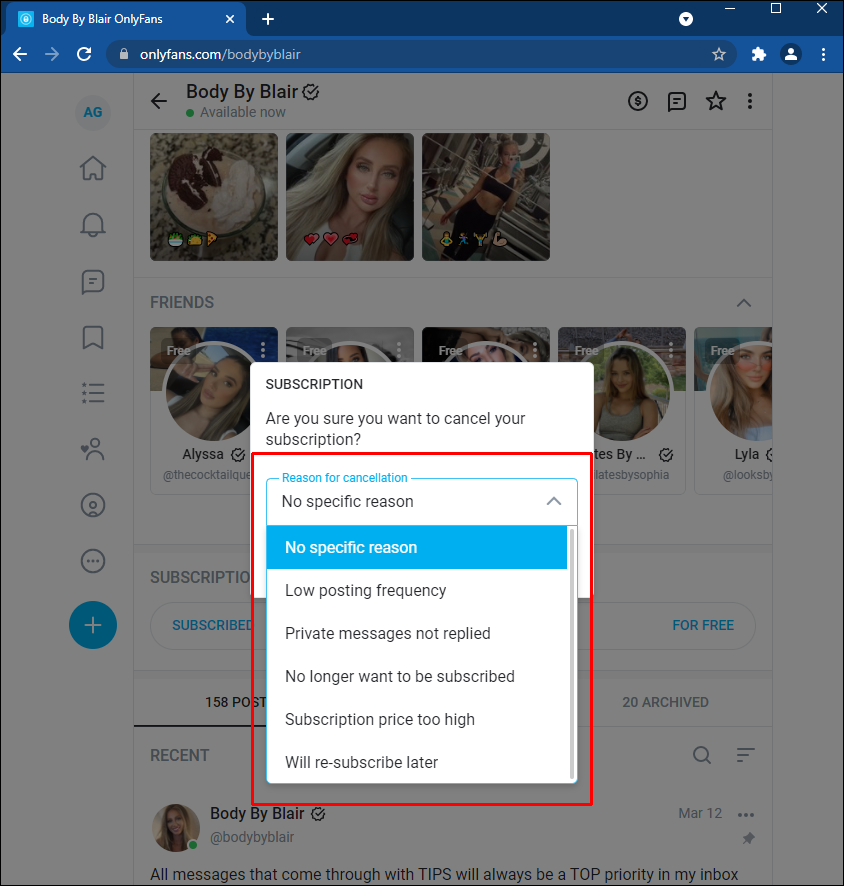
Cancelling and refunding are separate actions. Where you cancel inside the billing cycle determines how much access you retain and whether any refund pathway opens at all.
| Cancellation Timing | Access Duration | Refund Eligibility |
|---|---|---|
| Immediately after renewal charge | Full remaining period | Refund only via fraud or technical claim |
| Mid-cycle | Until period end date | No pro-rata refund issued |
| Shortly before renewal | Until period end date | No refund; renewal simply stops |
| After access expiry | None remaining | Denied at platform level |
The value of cancelling is entirely forward-looking.
This is standard subscription behaviour rather than anything unusual to the platform, and the same logic appears across most recurring billing systems. Budgeting accordingly means treating each renewal as a single purchase decision, not a running meter you can settle partway through.
Dispute Pathways Beyond Platform Refund Requests
A chargeback forces the payment provider to re-examine the transaction, and the outcome depends on documentation rather than on either party’s account of events. Accounts with repeated chargebacks can face restrictions or closure, and the platform may treat the disputed amount as owed.
It is a tool for genuine fraud and unresolved delivery failures, not a general escalation for denied requests. What the platform supplies to card issuers is a transaction record: charge date, amount, subscription period, and access grant status. If that record shows a delivered subscription period, the subscriber must demonstrate why the charge should not stand.
Understanding the difference between an unauthorized transaction and a disputed one matters before escalating, since card issuers treat each as separate dispute categories, and each one carries its own evidence requirements and review timelines.
Wallet Credit Refunds After Creator Deletion
Wallet funds behave differently from card charges. Credit sitting unspent in a wallet is not a purchased subscription period, so it can be returned through a different process when a creator page disappears. If a creator deletes their page, pending purchases that were never delivered often resolve into wallet credit rather than a card reversal. Recently spent funds are harder. Once a purchase is delivered and the period has begun, deletion of the creator’s page afterward does not automatically reverse the transaction.
Account deletion adds complexity. Closing your own account with charges still pending or in review can complicate resolution, since the account record supporting your claim is removed. Settle open disputes before taking that step. Because OnlyFans has no built-in discovery feed or directory, subscribers often find creators through ranking sites rather than browsing the platform. That makes third-party research valuable, and guides to the best onlyfans pages frequently include notes on how responsive each creator is to delivery issues, which reduces the odds of ever needing a refund pathway.

Planning Purchases Around Refund Calendar Awareness
Most refund disputes are avoidable. The subscribers who rarely file requests are the ones who time their purchases deliberately and document them immediately, turning a stressful process into a non-event. Five habits cover the majority of risk.
- Avoid PPV purchases near cycle end, when access and cancellation timelines overlap awkwardly.
- Verify recent creator activity before unlocking, since dormant pages carry higher deletion risk.
- Batch purchases where possible for consolidated documentation.
- Screenshot the transaction confirmation at the moment of purchase.
- Test access immediately after unlock, while the charge is still in the immediate window.
Account security supports all of this. Two-step authentication protects the account record that backs any claim, and it prevents unauthorized charges that would otherwise become refund cases in the first place. The same protective instinct applies to payment details, since unauthorized access to a saved card is one of the most common sources of disputed transactions.
That single habit converts a fuzzy memory into evidence, and evidence is what every refund pathway ultimately rewards.
FAQ
If I cancel immediately after auto-renewal charges, can I get that charge refunded?
No, in most cases. Cancelling stops the next renewal but does not reverse the current charge, because the subscription period has already been granted.
How long does OnlyFans take to respond to refund requests?
Complex cases involving creator deletion or fraud review can take longer, and each round of missing documentation adds days to the timeline.
Does requesting a refund affect my ability to subscribe to that creator later?
Subscribing again is generally possible. The creator may see the dispute record, and their willingness to engage with you afterward is their own decision rather than a platform restriction.
What happens to my wallet balance if I delete my OnlyFans account with pending charges?
Settle the open dispute first, then close the account once the balance and refund status are final.